

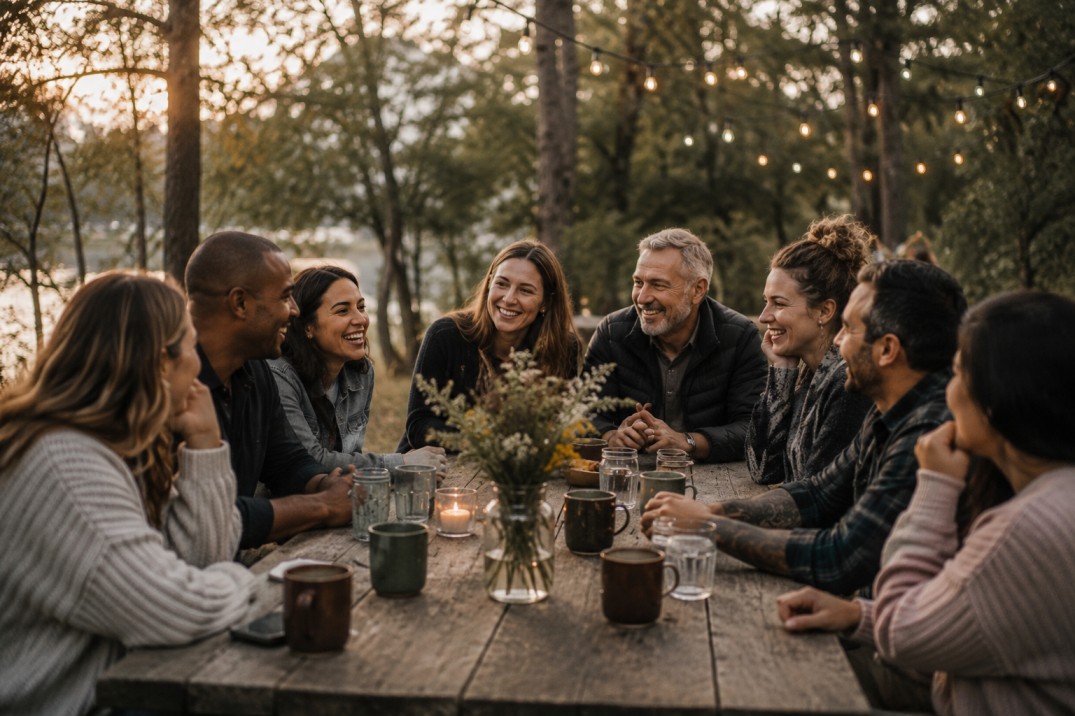
“Recovery is strongest when it looks like real life: complex, forever changing, and deeply connected.”
People outside recovery often imagine it as a single, clearly defined process; a set of steps, with a final destination and a guaranteed outcome. It sounds straightforward and comforting: “Follow the plan and everything will be fine.”
However, those who live and work in this space know better. Recovery is rarely that neat. It’s unpredictable, unreservedly human, and shaped by a thousand real‑life moments that don’t fit into any box.
Some people start their recovery journey through treatment, others through reflection or a conversation that shifts something inside them. Each story is valid, and every step is part of a bigger picture.
The Real Picture: People, Not Programs
At its heart, recovery is always about the people. It’s not a syllabus or a checklist. It’s families healing and rebalancing themselves after the chaos active addiction brings. It’s friends who don’t walk away when you’re at your lowest, and peers who keep showing up because they won’t give up on you. It’s professionals who listen, guide, and hold the space for hope until others are strong enough to carry it again and hold it for themselves.
There are moments of tears, moments of silence, moments of joy and moments that simply ask for endurance. Sometimes recovery is shouted proudly from the rooftops; sometimes it’s whispered privately or quietly saluted. All are real, and all belong.
When the Story Gets Too Narrow
Too often, a single, rigid narrative shapes how success is defined. It tells people what recovery should look like and leaves little room for how it actually unfolds. When recovery is measured by someone else’s standards, many people struggle to see where they fit. But when we stop trying to force it into neat storylines, we can see that healing isn’t linear, and there isn’t just one way to do it. It’s an evolving, relational process grounded in connection.
For many, recovery means choosing to stay sober, over and over again, sometimes through sheer perseverance in the face of real difficulty. And that daily choice becomes the foundation upon which everything else is built. It creates the conditions for recovery to be sustainable by offering reconnection, stability, routine and trust.
When we acknowledge the complexity of all of these dimensions working together, recovery starts to look like what it truly is: a whole, human experience. It’s not just about stopping something that harms us; it’s about creating something new and enduring, surrounded by people who understand that nobody gets there alone.
When we honor the many paths to recovery, we create space for people to breathe, express themselves, and belong, without shame, judgment or comparison, and this is where recovery starts to grow stronger.
Why Connection Changes Everything
Recovery isn’t something we do on our own. We recover in relationships, in communities, and through the steadying kindness of others. Support often appears in many forms:
- A peer’s shared story
- A family check‑in
- A professional’s encouragement
- A simple message that says, “You matter.”
Each act of care becomes a strand in the fabric that holds someone up and binds us together.
When we stop treating connection as an optional extra and recognize it as a fundamental requirement, it becomes the golden thread running through every recovery story. And when the community grows stronger, so does the possibility of healing.
Expanding the Frame
When we widen the lens, recovery becomes more than an individual experience; it’s a shared, societal one. It lives in families, workplaces, communities, and systems of care.
New approaches don’t replace existing models; they complement them. They allow for fluidity and resilience, giving people the freedom to adapt as they grow, and they acknowledge setbacks as part of the recovery process, not as evidence of failure.
This inclusivity and understanding reflects what real life looks like: forever shifting, beautifully complex, and entirely capable of renewal when met with compassion. When we make room for that reality, recovery becomes something everyone can see in others and themselves.
Building a Recovery Movement
The Recovery Movement is based in community and compassionate care, and it belongs to everyone:
- People in recovery
- Families and friends
- Clinicians
- Peers
- Communities that want to see change
This movement isn’t about swapping one story for another. It’s about telling all the stories and seeing the power of what happens when we stand for each other, side by side.
We believe in the power of honesty and inclusion, where everyone’s voice is welcome. When people come together, recovery moves beyond programs and becomes a shared purpose, and we’re shifting the narrative from isolation to connection, from stigma to understanding.
Where We Go From Here
Recovery isn’t a single path or outcome and it doesn’t happen in silos. It’s a living process that grows with every person who joins the conversation.
Removing the stigma around addiction and mental health depends on collective understanding, shared language, and genuine inclusion. It depends on each of us showing up for ourselves, and each other, with honesty, humility, and hope.
Whether you’re taking your first step, supporting someone you love, or building systems of care, you are part of The Recovery Movement.
Every story strengthens the network of care we all need. Every act of support keeps the movement alive. And the more voices we bring into this space, the closer we get to building a world where the achievement of recovery is recognized, respected, and celebrated.